

Parsing Errors and Hidden Talent: Why the Hiring System Is Collapsing in the AI era
And why high-tech gloss won't save a failing system

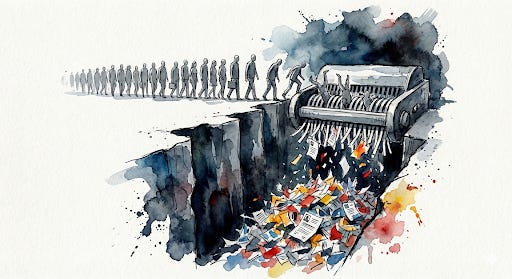
Sergey Brin dropped a line last week that should keep every HR Director awake at night: Google is hiring tons of people without degrees because “they just figure things out on their own in some weird corner.”
Meanwhile, back in the traditional corporate world, we continue to pretend that the standard hiring process actually works.
It doesn’t. And deep down, we all know it.
It starts with that ritualistic humiliation every professional has endured: you upload your CV, crossing your fingers like a desperate gambler hoping the system’s parsing logic works. Five seconds later, you realize you’ve lost. You now have to manually type in fifteen years of professional history because the platform’s AI doesn’t know how to read a compressed PDF.
We are deciding the future of human talent based on whether a file opens correctly. If the PDF is compressed wrong, you don’t exist. If your formatting is too creative for the machine, you are discarded.
And that is just the technical absurdity. The strategic hole is much deeper.
The Great Conflict of Interest
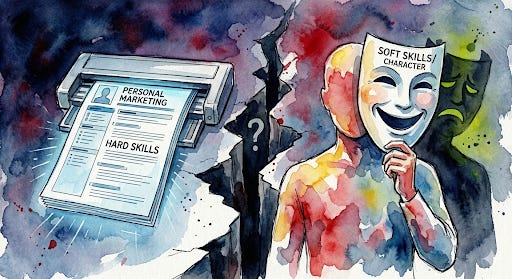
Our entire hiring infrastructure is built on a glaring flaw: we trust data declared by the applicant. We analyze resumes which are, by definition, pieces of personal marketing.
We have structured a multi-billion dollar industry around the questionable premise of analyzing a document that highlights hard skills, while everyone who has ever worked in an office knows the truth: we hire for the hard skills (what’s on the paper), and we fire for the soft skills (who the person actually is).
Anyone who has had to work alongside a "genius" toxic colleague knows that advanced Python skills do not compensate for a lack of character or an inability to collaborate. But the system prefers the paper. It’s safer. It’s quantifiable.
The Service Provider Trap

Historically, HR has settled into a comfortable role as a service provider to business units, often afraid to challenge the "internal client." The hiring manager asks for "someone exactly like the person who just left," and HR obeys, hunting for keywords.
This creates a perverse filter. People with diverse experiences—those who, as Brin noted, "learned in weird corners"—are ignored because they don’t fit the drop-down menus. They are difficult to categorize. They require a leap of faith that the modern ATS (Applicant Tracking System) is programmed to reject.
We force candidates into the ungrateful task of constantly tailoring their resumes to the job description, effectively asking them to strip away their uniqueness to fit a generic mold.
The Innovation Paradox
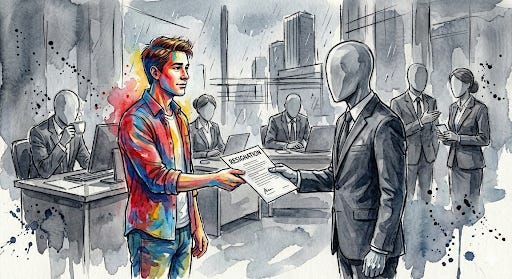
The irony is palpable. Companies scream for innovation, yet the true intrapreneurs—the ones who question processes and push boundaries—are often forced out of the average corporate environment because they don’t fit in.
Who stays? The "sheep." The yes-men. The people who fit the job description perfectly, never question authority, and add zero incremental value. We are retaining compliance and bleeding out innovation.
The AI Squeeze
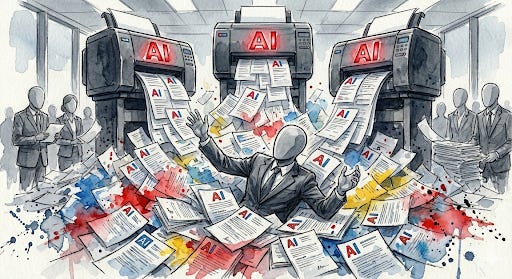
The scenario has now become even more chaotic.
On one side, we have AI agents and job-match platforms applying for positions on behalf of users, flooding recruiters with digital spam. On the other side, AI is taking over the grunt work—the simple, repetitive tasks where junior professionals used to cut their teeth.
We are entering an era where the entry-level rung of the ladder is missing, and the filtering system for senior levels is broken.
The Verdict

We are obsessed with optimizing resume screening when we should be blowing up the very concept of the resume.
Google has realized that real talent often lacks a degree or a perfectly formatted document. Real talent is often busy solving problems in some obscure corner of the internet.
The question isn't whether that talent exists. The question is whether your company would have the guts to interview them, or if they would be blocked at the gate because the system couldn't parse their zip code.
Fantastic piece on ATS parsing failures, the zip code example is especially brutal because it shows how arbitrary file format issues become career blockers. Built something similar years back and realized the core problem isnt the parsing algorithm but that we're optimzing for keyword matching when real talent signals are way more nuanced. The part about hiring for hardskills and firing for soft skills is something I've seen play out in like every tech team I've worked with.